A Gift to a Stranger
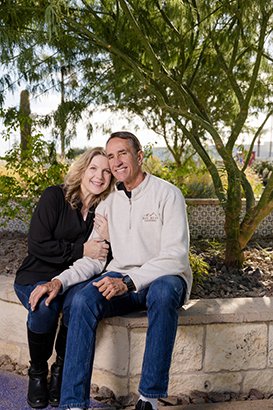
I have a sister. She is not my blood sister. She is a sister formed through friendship, shared battles and the quiet understanding that comes when two people have both heard the word cancer and know how it changes everything.
Her name is Marilyn.
In October 2016, Marilyn was diagnosed with Stage 1A invasive ductal carcinoma. She was told her risk of recurrence was 30 percent, and she chose bilateral mastectomies.
During the two months she waited for surgery, a second, highly aggressive cancer – ductal carcinoma in situ, or DCIS – developed. Marilyn says she did not learn of that second cancer until a year after surgery, when she changed oncologists and was told chemotherapy and radiation should also have been considered.
The surgeries did not end her health crisis. Marilyn says her body reacted immediately to the silicone implants. She developed total-body lymphedema and spent six months in a lymphedema clinic. Then came a brain tumor, radiation and more complications. By 2021, microscopic blood appeared in her urine, accompanied by pain in her right side.
In September 2022, Marilyn was referred to a nephrologist and diagnosed with Stage 3A chronic kidney disease. A biopsy later confirmed IgA nephropathy with secondary focal segmental glomerulosclerosis, known as FSGS — the disease process destroying her kidneys. Her implants were removed in December 2022, but her kidney function continued to decline.
Today, Marilyn's kidney function is approximately 12 percent. She has reached renal failure. Her choices have narrowed to dialysis or a transplant, and she hopes to receive a kidney before dialysis becomes necessary.
I simply wanted more time with Marilyn.
Her husband, Tom, wanted the same thing. To him, the first question was obvious: Could he give Marilyn one of his kidneys?
But willingness alone does not make two people medically compatible. Marilyn has type O blood; Tom has type A. In kidney transplantation, a person with type O blood generally must receive a type O kidney. A small percentage of people with type A blood have a subtype that can sometimes be compatible with a type O recipient, but testing showed that Tom was not that match for Marilyn.
He could not give his kidney directly to his wife.
So he decided to give it to someone else.
A stranger.
Through the National Kidney Registry's voucher program, Tom could donate to a recipient who was a strong match for his kidney and name Marilyn as the intended recipient of a future matched kidney. He could help save one person's life now while helping create a path toward the transplant Marilyn needed.
When I asked what made him say yes, Tom answered in seven words:
“I simply wanted more time with Marilyn.”
Tom underwent surgery and gave one of his kidneys to someone he did not know. The donor and recipient remain anonymous. After six months, the recipient may choose to make contact through the two transplant coordinators — or may choose never to do so. Marilyn and Tom are at peace with either decision.
What mattered was that someone, somewhere, had been given another chance at life.
For Marilyn, Tom's decision carried a meaning larger than the surgery itself.
“Tom's choice to help save two lives was one of the most selfless, humbling, compassionate and loving acts a soulmate could offer,” she told me. “His love for me and his sacrifice make me want to live and make it through the hard days as I wait for a kidney donor to be found.”
Tom's explanation was quieter, but no less powerful: “It was the only option we had to buy time for Marilyn to live. Going on dialysis isn't a guarantee of more time, so this was the only decision I could make.”
Two weeks after Tom's donation surgery, he and Marilyn left Cleveland to begin the trip home to Arizona. They had traveled about ninety minutes when the phone rang.
A living donor had been found for Marilyn.
They turned around. Marilyn's transplant is scheduled for September 30, 2026, at Cleveland Clinic, pending the donor's final testing and medical clearance. They are hopeful, but careful with that hope. A living donor may change their mind at any time before surgery, and Marilyn and Tom respect that right. For now, they are praying, waiting and preparing.
Marilyn told me that living donation may sound frightening, “but many worthwhile things in life are.” End-stage renal disease, she said, is an exhausting roller coaster she would not wish on anyone. If their positions were reversed, she would donate to Tom – or to someone else – in a heartbeat.
Tom wants people to understand something simple: most healthy people are born with two kidneys, but a carefully screened donor can live a full life with one. “By donating, you can save someone's life,” he said. “When you want to keep sharing life with your soulmate, the decision is clear.”
More than 90,000 people in the United States are waiting for a kidney. The National Kidney Registry reports that living donation can dramatically shorten the search for a matched kidney and that kidneys from living donors generally last longer than those from deceased donors.
I do not yet know how Marilyn and Tom's story will end. I know only that on September 30, if every final test goes as hoped, my sister will receive the gift she has prayed for.
But something remarkable has already happened.
A man who desperately wanted his wife to receive a kidney gave one of his own to someone he did not know. He could not be certain when – or whether – another stranger would someday do the same for Marilyn. He simply went first. And perhaps that is one of the most hopeful things we can say about human beings:
Sometimes, when we need a stranger to step forward for someone we love, we become that stranger for someone else first.
Learn More About Living Kidney Donation
Marilyn is a patient at Cleveland Clinic Transplant Center in Cleveland, Ohio.
Anyone interested in learning about becoming a living kidney donor can contact:
Cleveland Clinic Living Donor Team
Phone: 216-445-3150
Email: livingkidneydonorintake@ccf.org
National Kidney Registry
Choose Become a Living Kidney Donor
Potential donors undergo extensive medical testing and make their own fully informed decision. Learning more does not obligate anyone to donate.
Could you be the miracle someone is praying for?